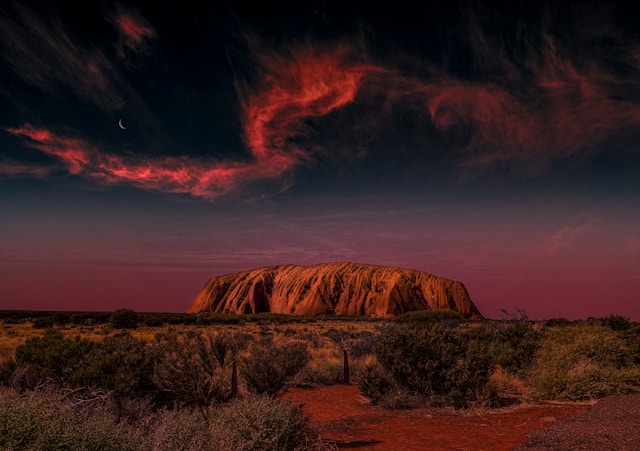
In 1985, a historic moment reshaped Australia’s relationship with its First Nations peoples. The Australian Government formally returned ownership of Uluṟu–Kata Tjuṯa National Park to its Traditional Owners, the Anangu people, in a ceremony that marked a turning point in Aboriginal land rights.
In 2025, Australia commemorates 40 years since the Uluru handback – a milestone that transformed cultural tourism, Indigenous storytelling, and national identity.
Today, Uluru stands as a global symbol of reconciliation, cultural resilience, and Aboriginal-led tourism.
What Was the Uluru Handback?
On 26 October 1985, then Prime Minister Bob Hawke handed over the title deeds of Uluru to the Anangu Traditional Owners.
The agreement included:
- Freehold ownership of the land
- Joint management of the national park
- Recognition of Anangu cultural authority
- Protection of sacred sites
This marked one of the most significant land rights victories in Australian history.
Why the Uluru Handback Changed Australian Tourism
Before the handback, tourism at Uluru largely excluded Aboriginal voices. Interpretation was minimal, sacred knowledge was often ignored, and cultural perspectives were absent from visitor experiences.
Following the handback:
- Anangu gained control over storytelling
- Cultural protocols were established
- Education became central to tourism
- Indigenous employment increased
Tourism shifted from spectacle to cultural exchange.
How Anangu Traditional Owners Rebuilt Cultural Storytelling
The Anangu introduced Tjukurpa, their ancient law and creation stories, into visitor education.
Through ranger-guided walks, cultural centres, and interpretive signage, visitors now learn:
- Creation stories of Uluru
- Traditional land management
- Bush food knowledge
- Spiritual significance of sacred sites
This transformed Uluru into a world-class cultural tourism destination.
Cultural Tourism at Uluru Today
Uluru-Kata Tjuta Cultural Centre
Designed by Anangu architects, the centre offers immersive exhibitions, film presentations, and cultural education.
Mala Walk
Guided by Anangu rangers, the Mala Walk shares ancestral stories and ecological knowledge.
Indigenous Ranger Programs
Local rangers protect biodiversity, manage fire regimes, and care for sacred landscapes.
Why Uluru Is No Longer Climbed
In 2019, climbing Uluru was permanently banned at the request of Traditional Owners.
This decision reflected:
- Cultural respect
- Spiritual significance
- Environmental protection
Rather than limiting tourism, the closure strengthened cultural engagement and enhanced visitor understanding.
Global Impact on Indigenous Tourism Models
The Uluru handback influenced Indigenous tourism models worldwide, demonstrating:
- The power of Indigenous land ownership
- Joint management frameworks
- Cultural tourism as economic empowerment
- Reconciliation through storytelling
Uluru is now studied globally as a benchmark for Indigenous-led tourism development.
What Travellers Can Learn from Uluru’s Story
Uluru teaches visitors:
- Respect for ancient cultures
- Responsibility toward fragile landscapes
- The importance of listening to Indigenous voices
- How tourism can support reconciliation
It is not simply a destination – it is a cultural education experience.
The Next 40 Years of Uluru Tourism
Looking ahead, Anangu leadership continues to shape Uluru’s future through:
- Digital storytelling
- Cultural youth programs
- Language preservation
- Eco-tourism innovation
Uluru’s story remains one of resilience, pride, and renewal.
FAQs
When was Uluru handed back?
Uluru was returned to the Anangu Traditional Owners on 26 October 1985.
Why is the Uluru handback important?
It represents a major milestone in Aboriginal land rights, reconciliation, and Indigenous tourism leadership.
Can tourists climb Uluru today?
No. Climbing was permanently closed in 2019 out of respect for Anangu cultural beliefs.